Why Your Hands Are the Bottleneck (Not Your Brain)
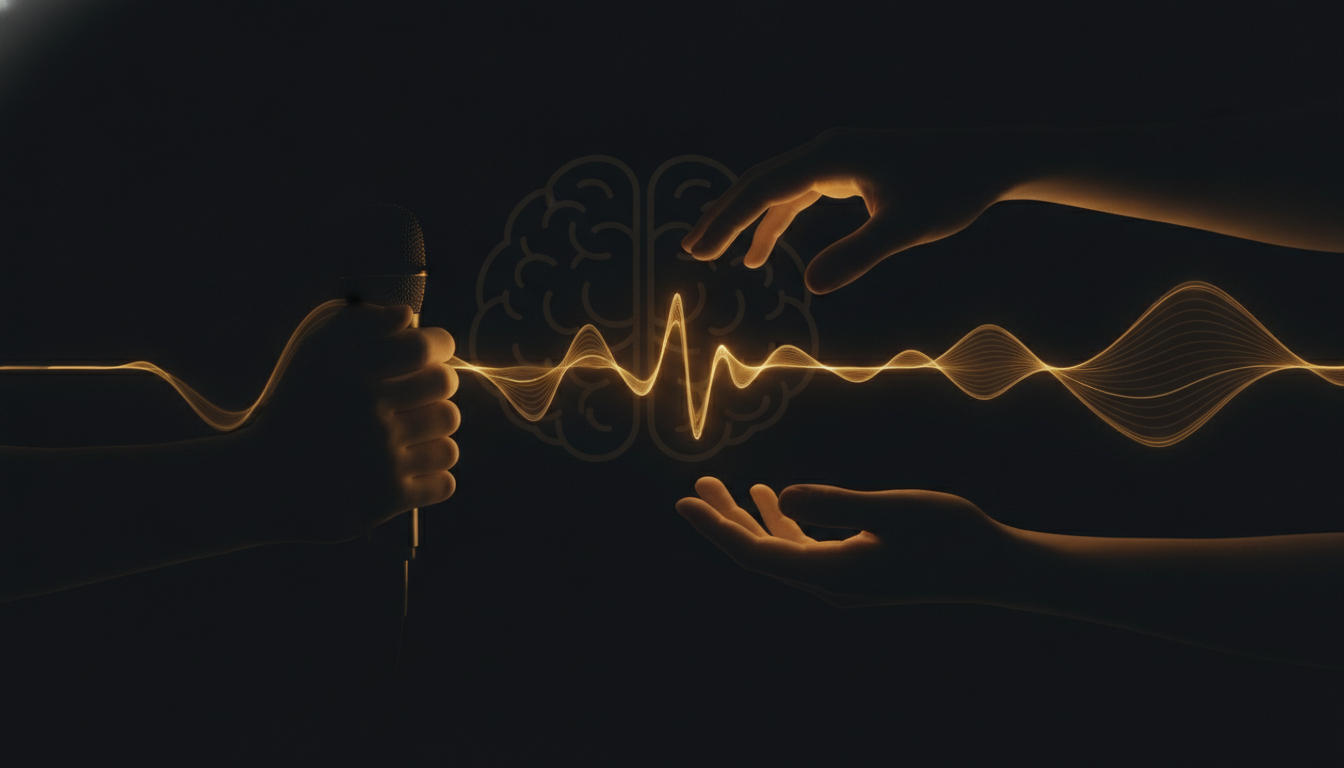
Most people assume they write slowly because they think slowly. That is not the problem. The average person speaks at 130 words per minute and thinks considerably faster. The average typing speed sits around 40 to 60 words per minute. The gap between what your brain produces and what your fingers can capture is where ideas go to die.
The Math Nobody Talks About
At 50 words per minute, writing a 1,000-word article takes 20 minutes of pure typing, assuming zero pauses, zero corrections, and zero moments where you lose the thread. Add in backspacing, reformatting, and staring at a half-finished sentence, and that number climbs fast.
Now consider that you can dictate the same article at 130 words per minute. That is under eight minutes of output. The difference is not trivial. Over a year of daily writing, the gap between typing and speaking adds up to dozens of hours.
Ideas Have a Half-Life
Here is the problem nobody talks about: ideas degrade while you wait to capture them. You have a good sentence in your head. By the time your fingers finish the previous one, the new thought has already started to blur. You reach for it and get something flatter than the original.
This is not a memory problem. It is a bandwidth problem. Your output channel is too narrow for the signal coming through.
Speaking removes that bottleneck. You say the sentence as you think it. The next one follows naturally. The momentum that typing constantly interrupts stays intact.
The Cognitive Load of Typing
Typing is not just slow. It is distracting. Every keystroke asks your brain to do two things at once: compose and transcribe. Those are different cognitive tasks. Composition is creative. Transcription is mechanical. Running them simultaneously means neither gets your full attention.
When you dictate, transcription disappears. Something like VoiceInk handles it locally on your Mac, in real time, while you focus entirely on what you are trying to say. You press a key, speak, and the words appear in whatever app you are already using.
Why Typing Feels Faster
Typing feels fast because it is familiar. You have done it for years. The friction is invisible because you stopped noticing it a long time ago.
The first time most people try dictation, it feels awkward. You are suddenly aware that you have to actually say the words out loud. There is a moment of self-consciousness, a pause before you begin. That feeling fades within a few sessions.
What replaces it is a strange sense of speed. Not rushed speed, but flowing speed. You finish a paragraph and realize you barely had to think about the mechanics of getting it out.
The Rethink Worth Doing
The keyboard has been the default writing tool for so long that questioning it feels odd. But default does not mean optimal. The keyboard made sense when computers needed precise input and voice recognition was unreliable. Neither of those things is true in the same way anymore.
Your brain is not the bottleneck in your writing. Your hands are. That is a solvable problem.
If you have never seriously tried dictating your work, it is worth at least one real attempt. Not a test sentence, but a full session where you sit down and talk through something you actually need to write. You may be surprised how much faster the first draft comes out when your mouth is doing the work your fingers usually do.
Don't type. Speak.
VoiceInk Pro for a full year at $50 instead of $69. Wispr Flow charges $144 a year; this is about a third of that. Mac and Windows, cancel anytime.
Get a year for $50Code READER50 is applied at checkout. Not ready to pay? Download VoiceInk free.