Why Your Hands Are the Bottleneck (Not Your Brain)
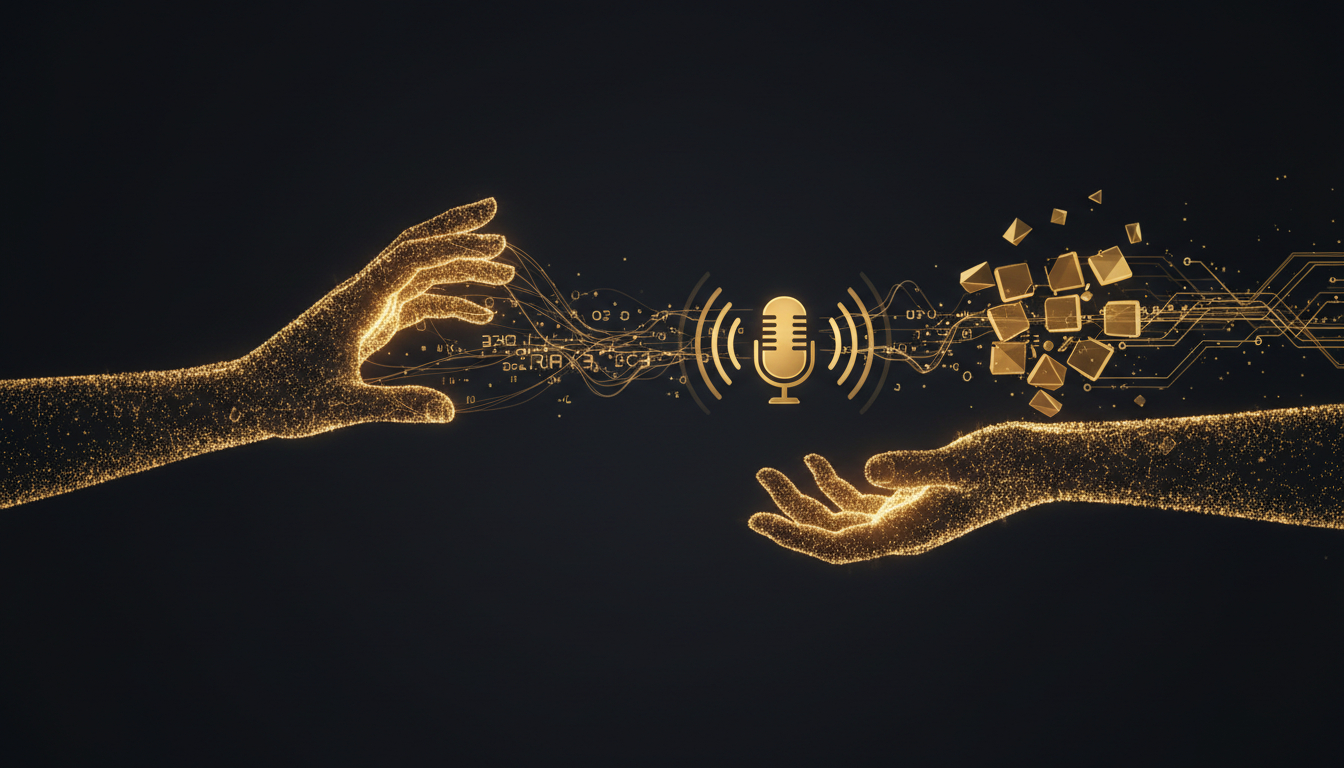
You have a thought. A clear one. By the time your fingers finish typing it, something is already missing. Not because the idea was bad, but because your hands simply could not keep up. This is the bottleneck nobody talks about.
The Numbers Are Not Close
The average person types around 40 words per minute. Fast typists hit 80 or 90. But conversational speech runs between 120 and 150 words per minute. That means even a skilled typist is capturing ideas at roughly half the speed they form them.
Over an hour of writing, that gap compounds. You pause mid-sentence to catch up. You lose the thread. You simplify a complex thought because the full version feels like too much work to type out. The bottleneck is not your vocabulary or your creativity. It is your hands.
What Gets Lost in the Gap
The problem is not just speed. It is fidelity. When you dictate, you tend to write the way you think, with natural rhythm, full sentences, and the connective tissue that makes an argument feel alive. When you type, you edit as you go. You cut before you commit. You second-guess the word before it even lands on the screen.
This is why so many writers find that their spoken first drafts are actually better than their typed ones. Not polished, but truer. Closer to the original idea.
RSI Makes the Problem Physical
For a lot of people, the bottleneck becomes literal. Repetitive strain injuries, carpal tunnel syndrome, and tendon inflammation turn typing from a minor inefficiency into a painful daily negotiation. You start rationing keystrokes. You type less so your hands hurt less. Your output shrinks not because your thinking slowed down, but because your body imposed a hard limit.
Voice input removes that limit entirely. You are no longer burning through a physical resource with every sentence.
The Cognitive Load Argument
There is also something happening at the attention level. Typing requires a small but constant slice of your focus, even if you are a touch typist. Your brain is managing finger placement, correcting errors, and watching the cursor. That overhead is real. It is not enormous, but it is always there.
When you dictate, that slice of attention comes back. Some people find they think more clearly, follow an argument further, and recover from tangents faster. The act of speaking a thought is closer to the act of having it.
Making the Switch
The first week of dictation feels awkward for almost everyone. You are used to the private inner monologue of typing. Speaking out loud feels exposed, even in an empty room. But that discomfort fades quickly, usually within a few days of regular use.
Tools like VoiceInk make the transition easier because the feedback is immediate. You press a key, speak, and your words appear in whatever app you are already using. There is no mode-switching, no separate interface to manage. It fits into your existing workflow instead of replacing it.
Start small. Dictate one email a day for a week. Notice whether the words come more easily, whether the output feels more like what you actually meant to say.
Your Brain Is Not the Problem
If you have ever felt stuck, slow, or frustrated with your writing output, it is worth asking whether the friction is really in your thinking or in the path between your thinking and the page. For most people, the thinking is fine. The hands are just in the way.
Try dictating for a day. You might be surprised how much you actually have to say.
Stop typing. Start talking.
VoiceInk turns your voice into text in any app. Local, fast, private. Free to start.
Download VoiceInk Free