Why Your Hands Are the Bottleneck (And How to Fix It)
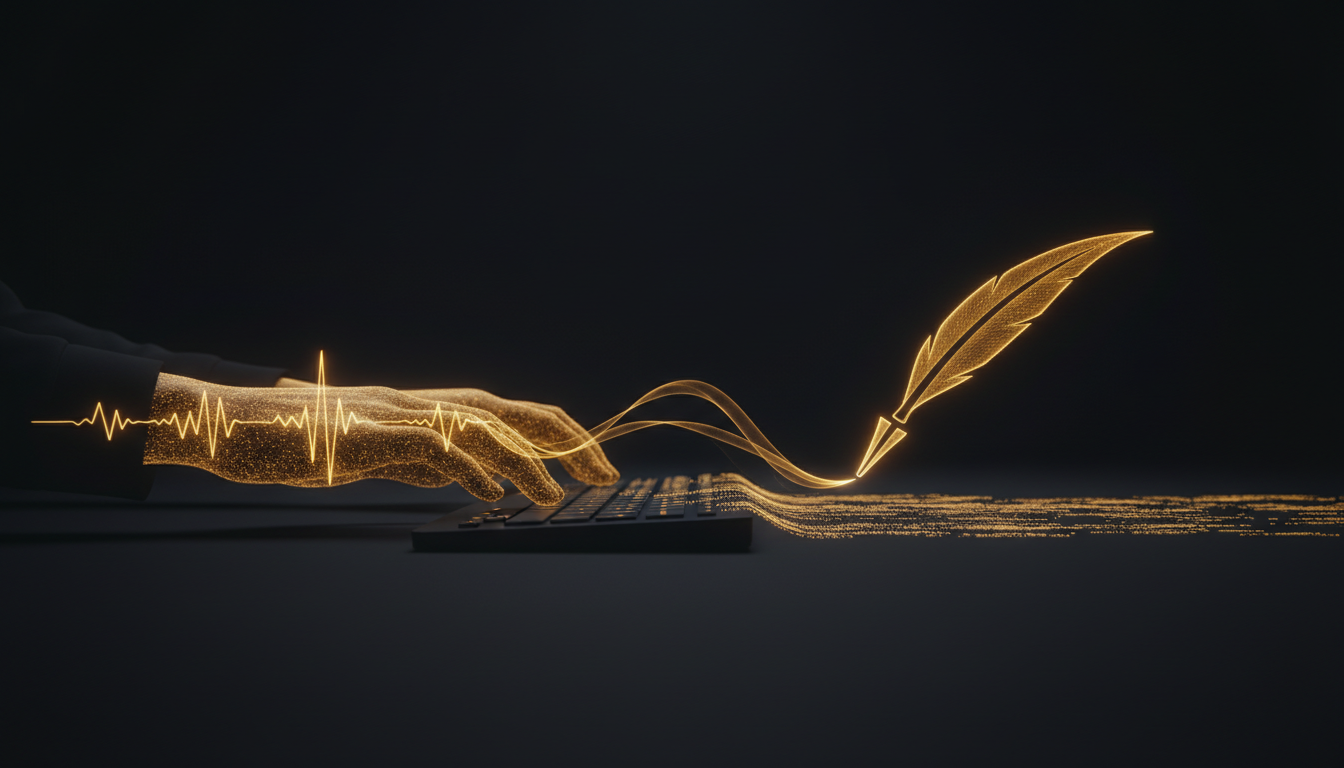
The average person speaks at 130 words per minute. The average typing speed is around 40 words per minute. That is not a small gap. That is three times your output sitting on the table, unused, every single day.
The Real Cost of Slow Input
When your hands can't keep up with your brain, something has to give. Usually it's the idea. You start a sentence, your fingers lag, and by the time you've typed the first clause, the second one is gone. You fill in something safe, something already formed, instead of chasing the sharper thought.
This is why so much writing feels flat. It's not that writers lack good ideas. It's that the act of typing forces a kind of premature editing. You slow down to a speed where only the most obvious thoughts survive.
Typing Speed Has a Ceiling
Practice helps, but only to a point. Most people plateau somewhere between 60 and 80 words per minute after years of daily typing. Professional typists can hit 100 to 120, but that takes deliberate training most people will never do.
Speaking, on the other hand, is something you've been doing your whole life. You already operate at full speed. There's no training period, no plateau. You just talk.
What Changes When You Speak Instead
The first thing people notice when they switch to dictation is how much longer their sentences get. Not worse, longer. More complete. The thought has room to finish itself before the input method cuts it off.
The second thing is pace. Writing by voice feels faster, but what's actually happening is that thinking and output are finally running at the same speed. There's no queue of half-formed ideas waiting for your fingers to catch up.
VoiceInk works this way by design. You press a key, speak, and your words land in whatever app is in focus. There's no separate window to manage, no copy-paste step. The gap between thought and text gets as small as it can get.
The Hidden Tax on Cognitive Load
Typing isn't just slow. It's a second task running in parallel with thinking. Every keystroke requires a small amount of attention. Over hours, that adds up. By late afternoon, many people find writing harder not because they're out of ideas but because they're out of bandwidth.
Voice input removes that second task. You think, you speak. The cognitive load drops to roughly what it takes to have a conversation. That's a meaningful shift, especially for long writing sessions or complex work like documentation and code comments.
It Takes About a Day to Adjust
Most people feel slightly awkward talking to their computer for the first few hours. That's normal. You're used to writing in a certain way, and speaking out loud feels exposed.
But the adjustment is fast. By day two, most people stop noticing the mode entirely. The words just appear. At that point the question shifts from "is this comfortable" to "why wasn't I doing this sooner."
If your hands are the bottleneck right now, the fix is not to type faster. It's to stop treating typing as the only option.
Try dictating something small today, a paragraph, an email, a quick note. See what comes out when your input speed matches your thinking speed.
Stop typing. Start talking.
VoiceInk turns your voice into text in any app. Local, fast, private. Free to start.
Download VoiceInk Free