Why Your Hands Are the Bottleneck (Not Your Brain)
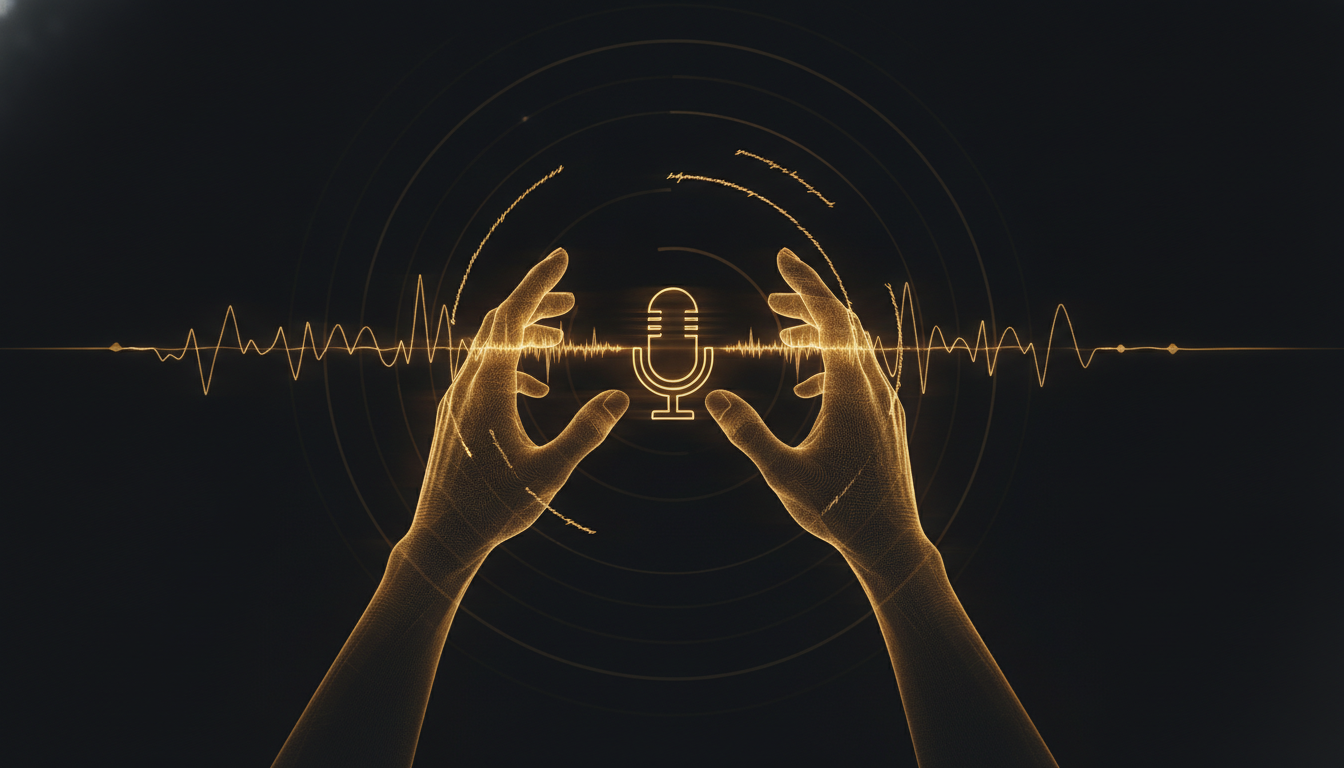
You have a thought. A sharp one. You start typing, and by the time your fingers catch up, the edges have gone soft. The original idea is still there, but something got lost in the translation from brain to keyboard. That gap is not a writing problem. It is a mechanical one.
The Numbers Don't Lie
The average person speaks at 130 words per minute. The average person types at 40. Even fast typists, the ones who feel like they're flying, top out around 80 words per minute. Meanwhile, conversational thought moves at somewhere between 400 and 800 words per minute.
That math means you are capturing, at best, maybe 20 percent of what you actually think. The rest evaporates while your fingers are still forming the previous sentence.
What Gets Lost
The first casualty is spontaneity. The second is nuance. When you type, your brain unconsciously edits to match your speed. Short words replace long ones. Complex ideas get simplified or dropped. You stop following the thought and start managing the output.
Writers know this feeling. You're mid-paragraph, you have the next three sentences perfectly formed, and by the time you finish the line you're on, they're gone. Not forgotten exactly, just dissolved.
Developers hit this too, just differently. You're deep in a problem, you understand exactly why a function is doing what it's doing, and then you stop to type a comment and lose the thread. The comment ends up generic. The insight disappears.
Typing Is a Skill That Costs You
We treat typing as neutral, just a transfer mechanism. But it is an active cognitive task. Your brain is managing finger placement, spelling, punctuation, formatting, and content at the same time. That is a real load. It slows down the part of your brain that is supposed to be doing the actual thinking.
Speaking is different. You learned to talk before you learned to read. It is the most natural output mechanism you have. When you speak, more of your cognitive bandwidth stays on the idea itself.
Voice Dictation Closes the Gap
This is what makes voice dictation more than a convenience feature. It is actually a closer match to how thinking works. When you speak your first draft, you stop managing the keyboard and start following the thought. Sentences get longer. Ideas connect in ways they didn't before. The writing sounds more like you.
Tools like VoiceInk make this practical on a Mac. You press a key, speak, and your words appear wherever your cursor is. No switching apps, no cloud processing, no lag. The friction is low enough that your brain doesn't have to switch modes.
The Editing Objection
The most common pushback is that dictated text needs more editing. That's sometimes true, especially at first. But editing a messy draft of real ideas beats editing a clean draft of watered-down ones. You can fix grammar. You can't recover the thought you never captured.
And with practice, your spoken drafts get cleaner. You develop a dictation voice, slightly more deliberate than conversation, slightly less formal than typed writing. It takes a few weeks to find it.
What to Do With This
Start with low-stakes output. Dictate a quick email, a Slack message, a note to yourself. See what it feels like to speak faster than you can type. Notice whether the ideas come out differently.
For most people, they do. The sentences are longer. The thinking is more complete. The gap between what you meant to say and what you actually said gets narrower.
Your hands are not the problem. They were just never the right tool for this job. Give your brain a chance to work at its actual speed.
Stop typing. Start talking.
VoiceInk turns your voice into text in any app. Local, fast, private. Free to start.
Download VoiceInk Free