Why Your Hands Are the Bottleneck (And How to Fix It)
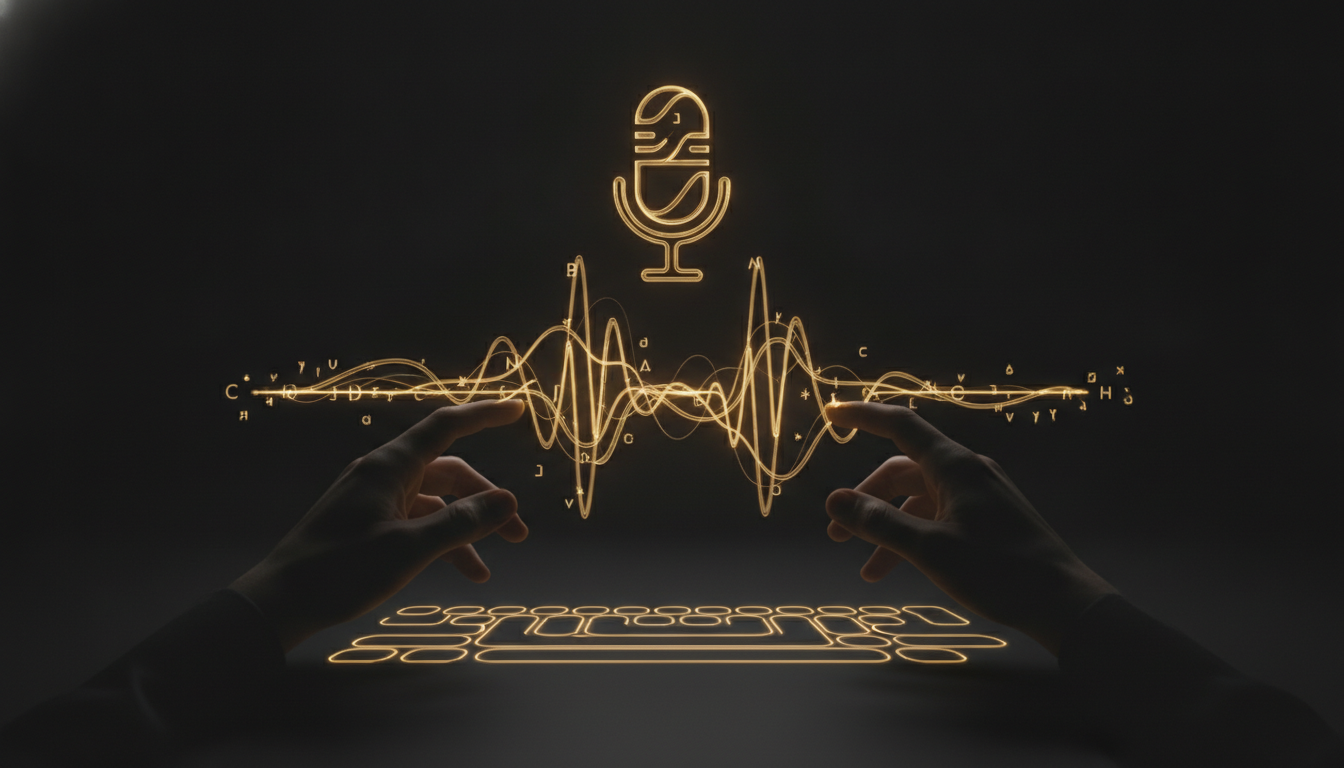
Most people type at 40 words per minute. Most people speak at 130. That gap is not a minor inconvenience. It is where your best ideas get stuck, simplified, or abandoned before they ever reach the page.
The Math Nobody Talks About
If you write for two hours a day at 40 wpm, you are producing roughly 4,800 words. At speaking pace, the same two hours yields around 15,600 words. That is not a small difference. That is a book chapter versus a few paragraphs.
Speed is only part of it. The real cost is cognitive. When your hands cannot keep up, your brain starts self-editing before you have even finished a thought. You trim sentences mid-idea. You skip the nuance. You lose the thread because you are too busy managing the physical act of typing to follow where your thinking wants to go.
Typing Is a Skill, But It Is a Ceiling
Professional typists top out around 100 wpm. That is years of practice, and it is still slower than ordinary conversation. You cannot train your way out of this. The ceiling is physical.
Voice does not have that ceiling. You already speak at full speed. You have been doing it since you were three years old. There is no skill curve, no muscle memory to build. You open your mouth and the words come out.
The technology has finally caught up. Local transcription tools like VoiceInk convert speech to text in real time, with accuracy that holds up even for technical language and proper nouns. You press a key, speak, and your words appear in whatever app is in front of you. No cloud upload. No waiting.
Where the Bottleneck Actually Hurts
Think about the moments when you feel it most. You are writing an email and you already know exactly what you want to say, but by the time your fingers catch up, the clarity is gone. You are taking notes in a meeting and you fall two sentences behind. You are drafting something and the opening line just will not come because the pressure of typing makes the blank page feel heavier than it is.
These are not writing problems. They are input problems.
Switching to voice does not mean dictating perfect prose. It means getting the thought out first and cleaning it up later. Spoken first drafts are messier, yes. They are also faster, fuller, and often more honest than what comes out of careful, finger-by-finger typing.
The Mental Shift Required
Most people try dictation once, feel awkward, and stop. That is normal. Typing has a delete key. Speaking feels permanent even when it is not. The trick is to give yourself permission to ramble.
Treat your voice like a rough sketchpad. Say the half-formed thought. Say the wrong word and then say the right one. Say "I am not sure how to put this but" and then put it. Transcription catches all of it, and editing is faster than generating.
After a week of this, most people find they cannot go back to typing long-form content. The hands start to feel slow. The keyboard starts to feel like a constraint rather than a tool.
What to Do Today
Start small. Pick one thing you write every day, maybe a daily journal entry, a status update, or a draft email, and dictate it instead of typing it. Do not edit while you speak. Just talk until the thought is out, then read what appeared.
You will probably be surprised how close it is to what you meant to say. You will almost certainly be surprised how fast it came out.
Your hands have been working too hard for too long. Give your voice a turn.
Stop typing. Start talking.
VoiceInk turns your voice into text in any app. Local, fast, private. Free to start.
Download VoiceInk Free