Why Your Hands Are the Bottleneck (And What to Do About It)
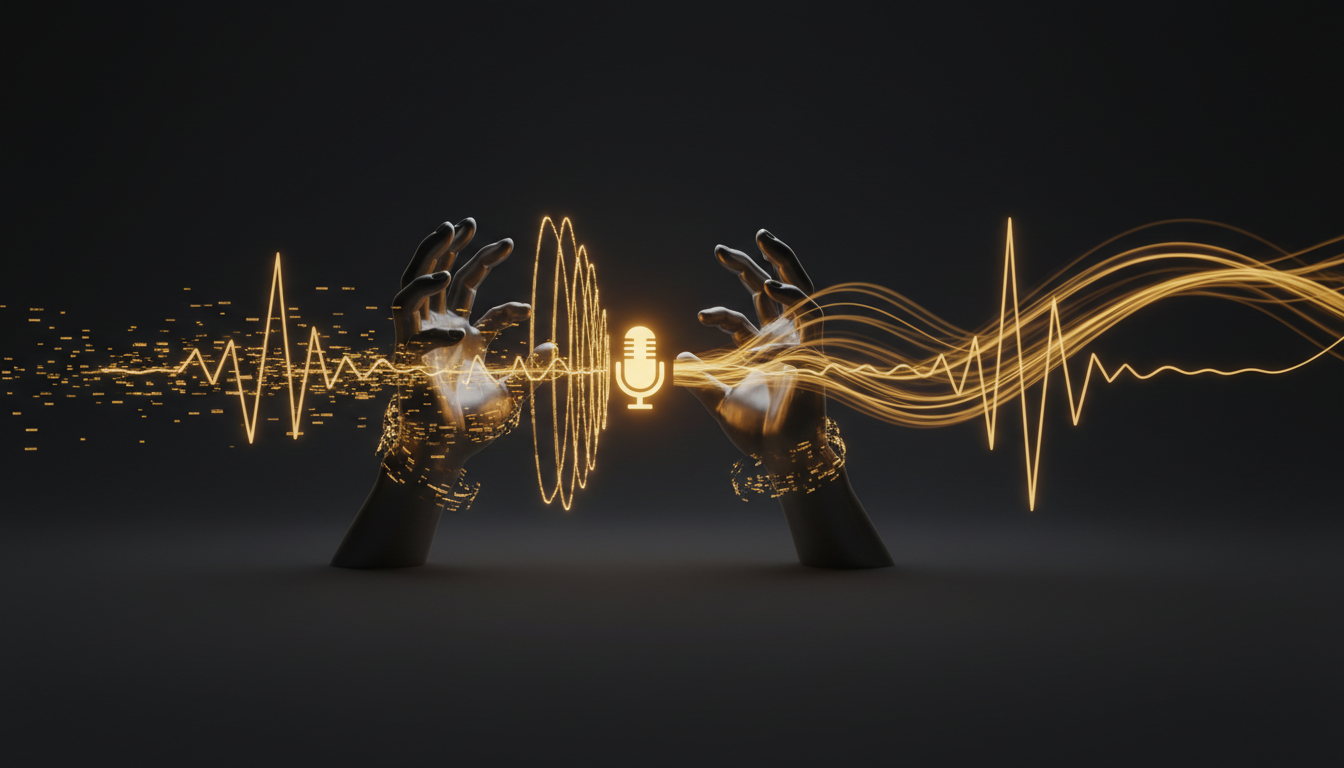
Most people treat typing as a neutral activity, just a way to get words from brain to screen. But typing is not neutral. It is a physical constraint sitting between your thoughts and your output, and for most people, it cuts throughput by two thirds.
The Numbers Are Not Close
The average typing speed is around 40 words per minute. Trained touch typists hit 70 to 80. Competitive typists reach 120. But spoken language? Most people speak naturally at 120 to 150 words per minute without trying. That is not a small difference. That is the difference between a trickle and a river.
When you are writing an email, drafting a document, or thinking through a problem, your brain is generating ideas faster than your fingers can record them. So you slow down. You start editing mid-sentence. You lose the thread. The constraint shapes the thought.
What Gets Lost in the Gap
The problem is not just speed. It is the cognitive load of typing itself. Every keystroke is a micro-decision. Your working memory is doing two jobs at once: generating content and managing its physical transcription. Research on writing and cognition consistently shows that reducing transcription burden improves the quality of output, not just the quantity.
This is why some writers find that their dictated drafts feel more natural and less stilted than their typed ones. When you talk, you use the rhythms of actual speech. You finish sentences. You commit to an idea instead of backspacing through it.
The Hands-as-Bottleneck Problem Gets Worse Over Time
For people who type professionally, the constraint compounds. Repetitive strain injuries affect an estimated 1.8 million workers in the US each year. Carpal tunnel syndrome, tendinitis, and general hand fatigue are not rare edge cases. They are occupational hazards for anyone who earns a living at a keyboard.
Even without injury, there is cumulative fatigue. After four or five hours of heavy typing, output quality drops. Fingers slow down. Errors increase. The bottleneck gets tighter exactly when you need it to open up.
Voice Input Is Not New, But It Is Finally Good
Dictation has existed for decades, but early tools required training periods, spoke in strange cadences to trigger punctuation, and still got things wrong often enough to break focus. The friction was high enough that most people gave up.
That changed with local, on-device transcription models trained on massive speech datasets. Tools like VoiceInk run entirely on your Mac, with no audio sent to a server, no subscription to a cloud service, and transcription fast enough that your words appear almost as you say them. The delay is gone. The privacy concern is gone. What is left is just speaking.
Where the Shift Matters Most
Not everything benefits from dictation equally. Short bursts of typing, passwords, code syntax, and proper nouns with unusual spellings are still faster by hand. But for prose, long-form notes, emails, documentation, and first drafts of anything, speaking is almost always faster once you stop fighting the habit.
The key word is habit. Typing feels natural because you have done it for years. Dictation feels awkward at first because your brain is not yet used to producing finished-enough sentences on the first pass. That adjustment takes a week or two, not months. Most people who stick with it do not go back.
Start Small
You do not need to rebuild your entire workflow. Pick one task you do every day, morning email replies, a daily journal entry, meeting notes, and do it out loud for two weeks. Track your time. Notice whether the output is worse or just different.
The hands are a tool. Like any tool, knowing when to put them down is part of using them well. If you have never seriously tried dictating your work, now is a reasonable time to find out what you have been leaving on the table.
Stop typing. Start talking.
VoiceInk turns your voice into text in any app. Local, fast, private. Free to start.
Download VoiceInk Free