Why Your Hands Are the Bottleneck (Not Your Brain)
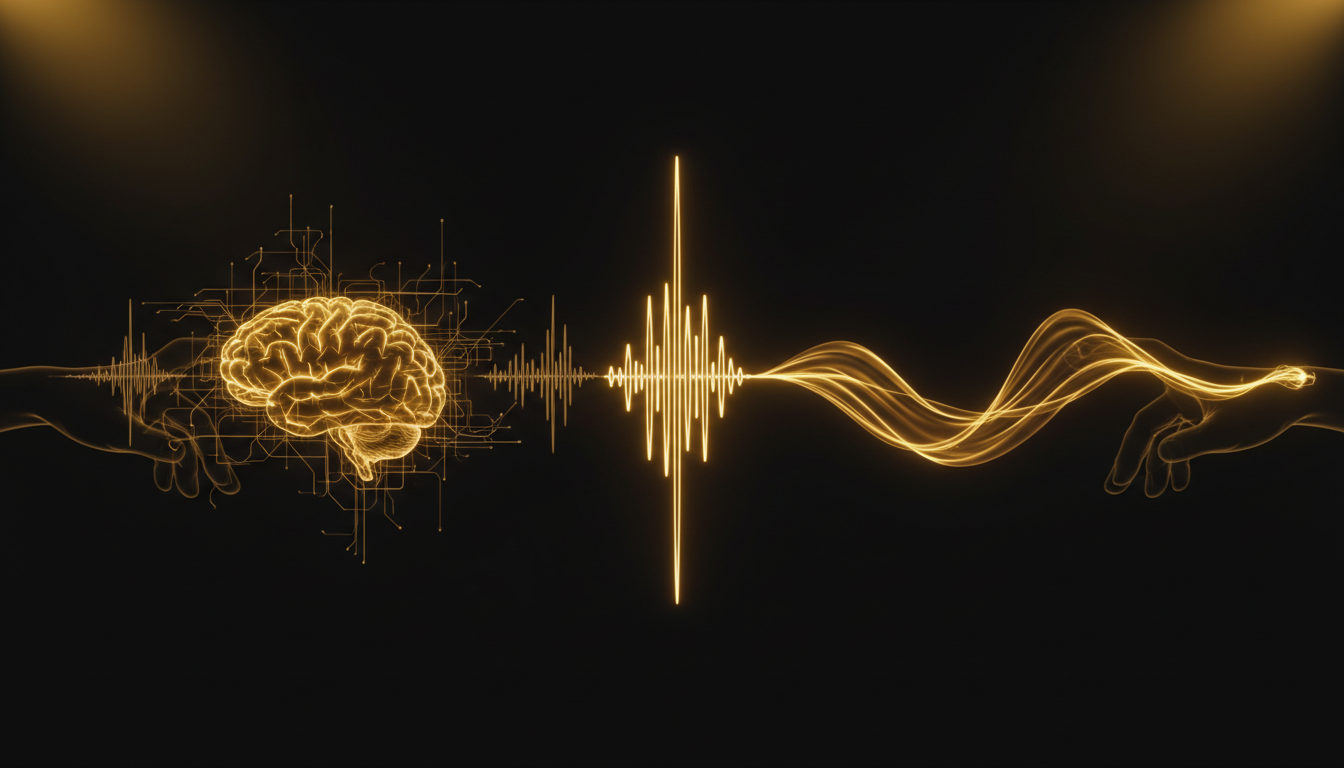
The average person types around 40 words per minute. The average person speaks at 130. That is not a small gap. That is your brain idling in second gear while your fingers try to keep up. Every time you sit down to write, you are already working at a third of your natural speed.
The Real Cost of Slow Output
When output is slow, thinking changes. You start editing before the sentence is finished. You trim ideas before they are fully formed. The internal editor kicks in not because the writing is bad, but because you have time to second-guess while your fingers are still moving.
This is why so many first drafts feel thin. It is not a creativity problem. It is a throughput problem.
At 40 words per minute, a 1,000-word draft takes 25 minutes of pure typing, and that assumes no pauses, no corrections, no staring at the ceiling. In practice, most people take 60 to 90 minutes to produce 1,000 rough words. At speaking pace, that same draft takes under 10 minutes.
Typing Rewards a Certain Kind of Thinking
Typing is sequential. You move left to right, one word at a time, and the physical act of pressing keys reinforces a linear, careful mode of thinking. That is useful for editing. It is not ideal for generating.
Speaking is different. When you talk, you follow the thought rather than construct it. Sentences come out longer, more natural, less guarded. Most people find that their spoken prose is closer to their actual voice than anything they produce at a keyboard.
This is not speculation. Journalists, novelists, and academics have dictated their work for decades. John Grisham dictates. Dan Brown dictates. The practice predates computers entirely, going back to authors who dictated to stenographers.
The Invisible Friction of the Keyboard
Beyond speed, there is friction. Opening a document, positioning your hands, finding the right keys, the small mechanical overhead of typing adds up across a day. Each piece of friction is a small interruption between the thought and the page.
Voice removes most of that. With a tool like VoiceInk, you press a key, speak, and the words appear wherever your cursor is sitting. No switching apps. No extra steps. The gap between thought and text gets very small.
That matters most in the first few seconds of a writing session. The hardest part of writing is not the middle; it is starting. When starting costs less, you start more often.
What You Lose and What You Gain
Dictation is not better at everything. Precise technical writing, code, complex formatting, these still benefit from direct keyboard input. Voice is not a replacement for typing. It is a better tool for the generation phase of writing.
The workflow that works for most people is a split: dictate the draft, type the edits. Generate with your voice, refine with your hands. Each mode does what it does best.
You also have to get comfortable hearing your own thoughts out loud, which takes a few sessions. The first time you dictate, you will probably speak in shorter bursts than you intend. That loosens up quickly. By the end of the first week, most people are producing more in a morning session than they used to produce in a full day.
The Gap Is Not Going to Close Itself
Your typing speed is not going to double. Even with practice, most people plateau somewhere between 60 and 80 words per minute, and that still falls short of natural speech. The ceiling on keyboard input is built into the physical mechanics of fingers on keys.
Your voice, though, is already fast enough. It has always been fast enough.
If you have never tried dictating a draft, even a short one, it is worth an afternoon. The gap between what you think and what you write might be smaller than you expect.
Stop typing. Start talking.
VoiceInk turns your voice into text in any app. Local, fast, private. Free to start.
Download VoiceInk Free