Why Your Hands Are the Bottleneck (Not Your Brain)
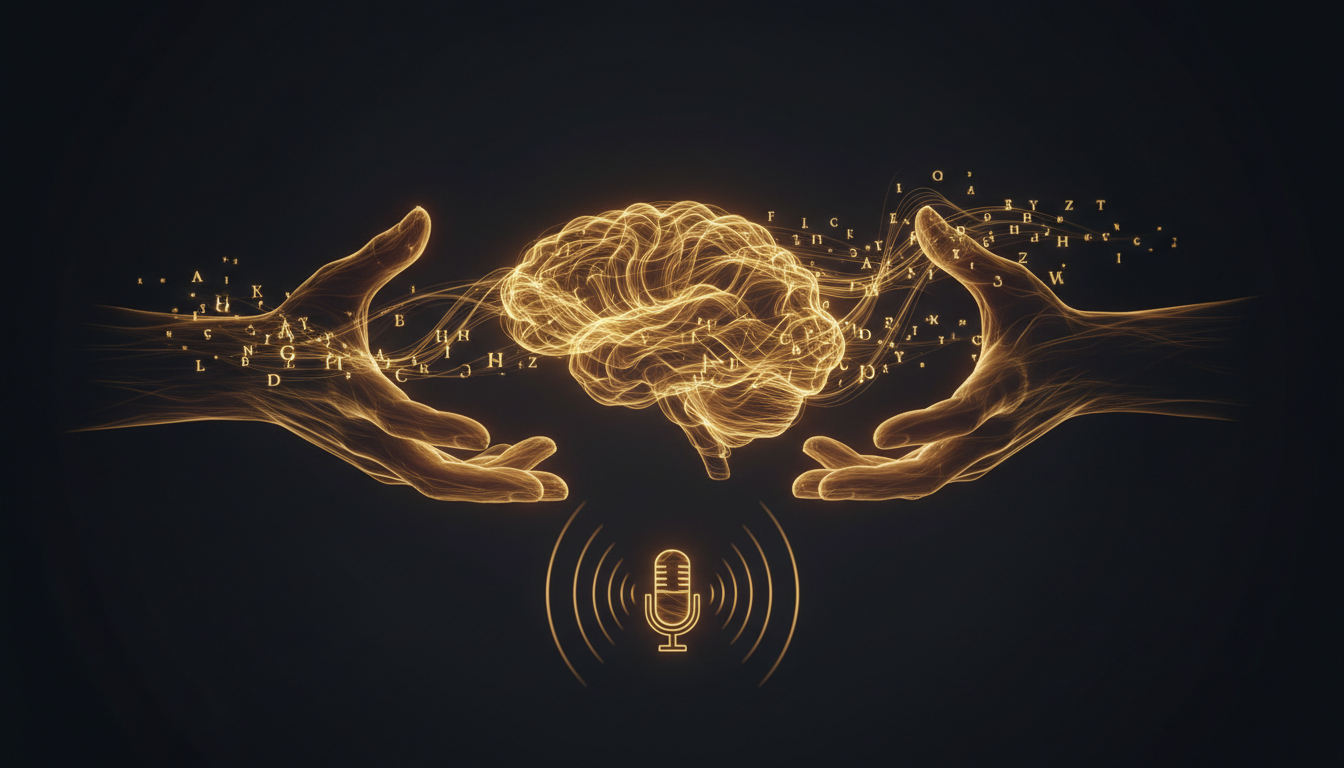
Most people assume they think slowly. They don't. They type slowly. The average typing speed is around 40 words per minute. The average speaking speed is 130. That's not a small gap, it's the difference between keeping up with your thoughts and constantly falling behind them.
The Friction You've Stopped Noticing
When you've typed for years, the friction becomes invisible. You stop noticing the half-second pause before each sentence, the ideas you quietly abandon because they're too long to bother writing out, the way your inner monologue simplifies itself to fit what your fingers can manage.
That simplification has a cost. Your first draft isn't your real first draft. It's an already-edited version, shaped by the speed limit your hands impose.
Thinking Faster Than You Can Capture
This problem is worst for people who think in bursts. Writers mid-scene. Developers trying to work through a logic problem in plain English. Anyone composing a long email who keeps losing the thread between sentence two and sentence five.
The thought arrives fast. The capture is slow. By the time you finish typing one idea, the next one has faded. You're not blocked, you're bottlenecked.
Speaking removes that bottleneck almost entirely. When you dictate, the output speed matches the thought speed. The ideas don't queue up and evaporate. They land.
It's Not Just Speed
The speed difference matters, but it's not the whole story. Typing is a fine motor task. It requires sustained, precise physical coordination. That coordination pulls cognitive resources, even when you're fluent at it.
Speaking requires almost none of that. You've been doing it since age two. The cognitive overhead is close to zero, which means more of your attention stays on the actual thinking.
Researchers who study writing have found that dictated text tends to be longer and more fluent than typed text, even when the writer is a fast typist. The physical act of typing creates micro-interruptions. Dictation doesn't.
Why People Resist It Anyway
The most common objection is that it feels weird. Talking to your computer, especially in an open office or a quiet apartment, feels performative. Like you're narrating your own life.
That feeling fades. Most people who stick with voice dictation for two weeks report it starts to feel as natural as typing. The initial awkwardness is a familiarity problem, not a fundamental one.
The second objection is accuracy. Early dictation software was bad enough to make the whole exercise frustrating. That's no longer the case. Tools like VoiceInk run a high-accuracy local transcription model directly on your Mac, so the words appear quickly and correctly, without sending audio to a server somewhere.
The Practical Test
Here's a simple way to see the gap for yourself. Set a timer for five minutes and type whatever's on your mind. Count the words. Then reset the timer, speak freely into a dictation tool, and count again.
Most people produce two to three times more content when speaking. More importantly, the spoken version is usually less stilted. The sentences are longer, the ideas more fully developed, because you weren't rationing your thoughts to fit your typing speed.
What Changes When You Switch
The shift isn't just about raw output. When your capture speed matches your thinking speed, you stop self-editing before you've even started. You get a truer first draft. Messier, yes, but more honest and more complete.
From there, editing is easy. You have material to work with. The hardest part of writing, getting the ideas out of your head and into a form you can manipulate, is already done.
If you've never tried dictating seriously, it's worth an experiment. Not because it's magic, but because it removes a physical constraint you may have forgotten was there.
Stop typing. Start talking.
VoiceInk turns your voice into text in any app. Local, fast, private. Free to start.
Download VoiceInk Free