Dictating Your First Draft: A Writer's Practical Guide
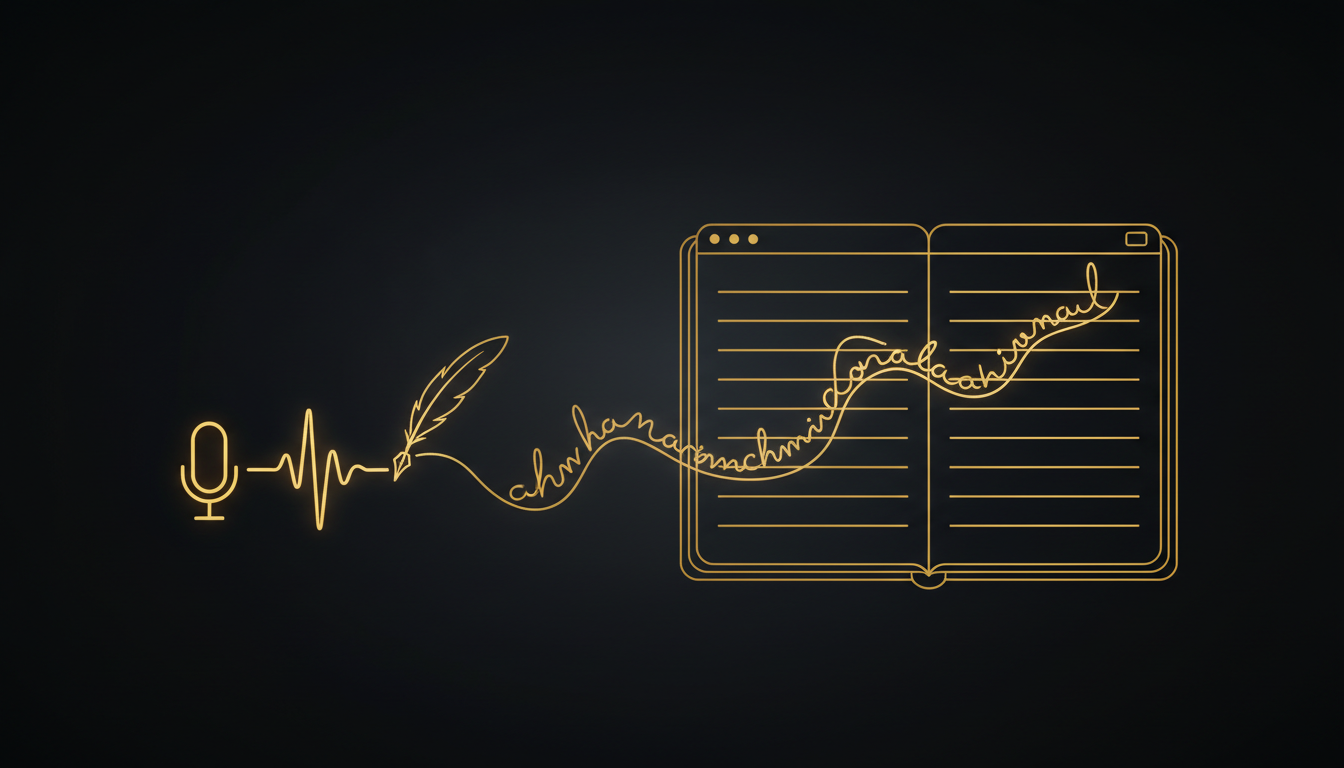
The first draft's only job is to exist. It doesn't need to be good. It needs to be words on a page so you have something to work with. Voice dictation is nearly perfect for this job, because speaking lowers the activation energy of getting started and keeps you moving once you're in motion.
Here's how to make it work.
Stop Editing While You Talk
This is the one rule that matters most. When you dictate, the temptation is to pause, listen to what you just said, and revise it before moving on. That's the same trap writers fall into when they type, reading back over every sentence instead of pushing forward.
Speak the paragraph through. Let the imperfect words land. You will fix them in the second draft. The job right now is output, not quality.
If this feels hard, try keeping your eyes closed or looking away from the screen while you speak. Removing the visual feedback breaks the edit loop.
Use Voice for Volume, Not Precision
Dictation is fastest when you're generating, not constructing. Use it for the scenes where you know roughly what happens. Use it for the argument you've already thought through. Use it for the section you've been avoiding because it feels like too much work to type.
Don't use it for the line you've been trying to get exactly right for two days. That sentence needs to be wrestled with at the keyboard. Voice is for the 80 percent. The keyboard is for the 20.
Set Up Your Environment
A few minutes of prep makes the session go better. Open your document. Put your cursor where you want the words. Have a rough outline or some notes visible so you're not improvising from nothing. Know what you're going to say before you press the key to start.
With VoiceInk, you press your hotkey, speak, and the words appear wherever your cursor is sitting. There's no mode to switch into, no separate window to manage. That directness matters when you're in a flow and don't want friction.
Deal with Punctuation Simply
You say "period," "comma," "new paragraph," and "question mark" out loud. This feels unnatural for about twenty minutes and then becomes background habit. Most writers find they need to consciously add fewer commas than they'd type, because speech already carries natural pauses that punctuation imitates.
For longer works, some writers do a punctuation pass at the end, reading through specifically to fix the mechanical stuff. That's a reasonable approach if saying "comma" breaks your concentration.
What Dictated Drafts Actually Sound Like
Honestly? Better than you'd expect. More direct, usually. Less hedged. The sentences tend to be shorter because you run out of breath before you run out of clauses. That's often a feature. Academic writing and corporate writing are both full of long passive constructions that almost never show up in spoken language.
Some writers worry their dictated prose will sound too casual. It might, and that's easy to fix in revision. Sounding too stiff is harder to fix, and it's the more common problem with typed first drafts.
What to Do With the Output
After a dictation session, give it an hour before you read it back. Come to it like an editor, not a speaker. You'll catch the rough transitions, the repeated words, the sentences that ran long. That revision pass is where the writing becomes writing.
The dictated draft is the clay. You still need to sculpt it. But you'll have a lot more clay a lot faster than you would have at the keyboard.
If you've been stuck on a draft, try speaking the next section out loud. Don't type it, don't plan it carefully, just talk through what happens next. You might be surprised how much you already know.
Stop typing. Start talking.
VoiceInk turns your voice into text in any app. Local, fast, private. Free to start.
Download VoiceInk Free